
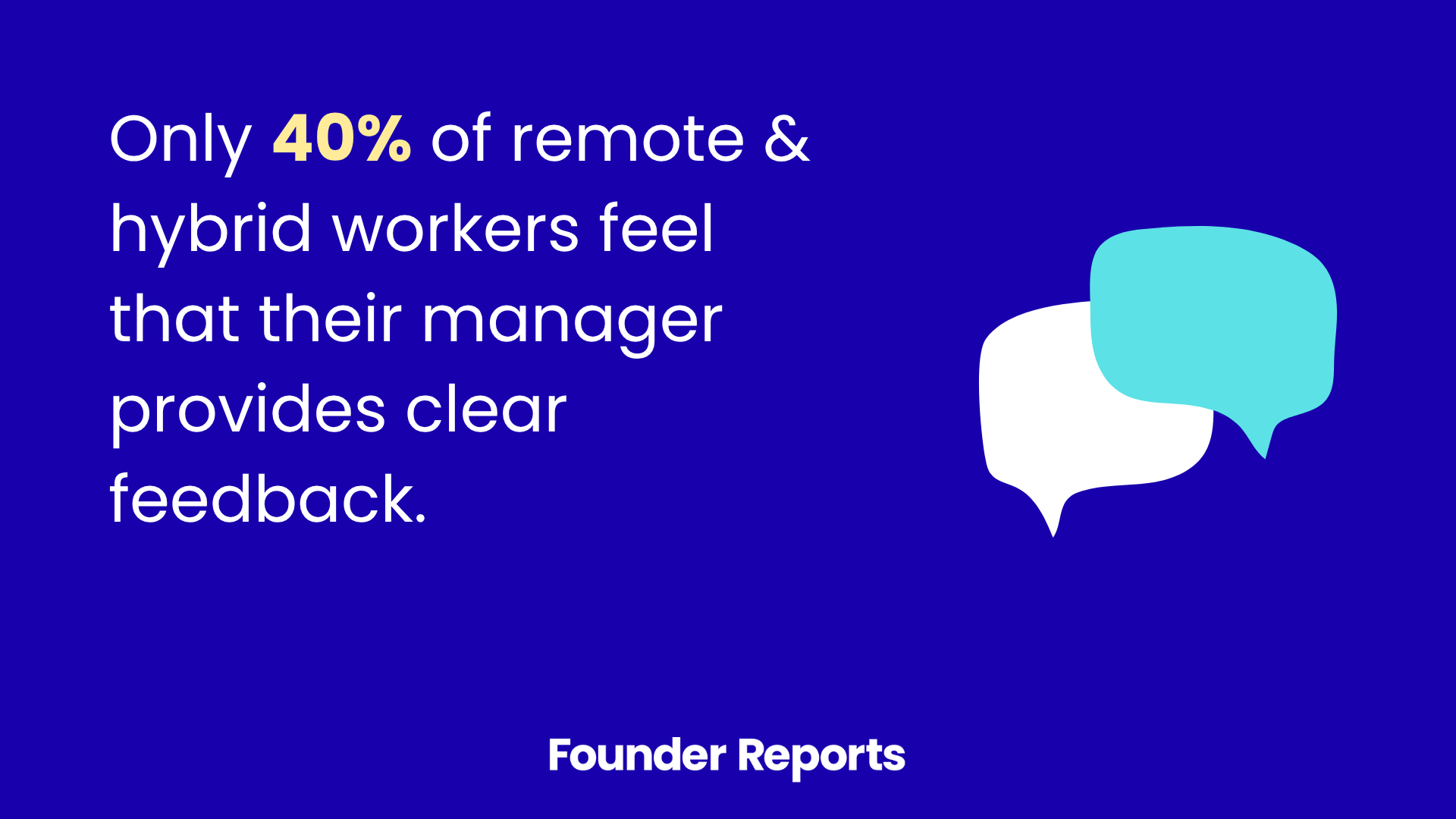
Only 40% of remote and hybrid workers feel that their manager provides clear feedback
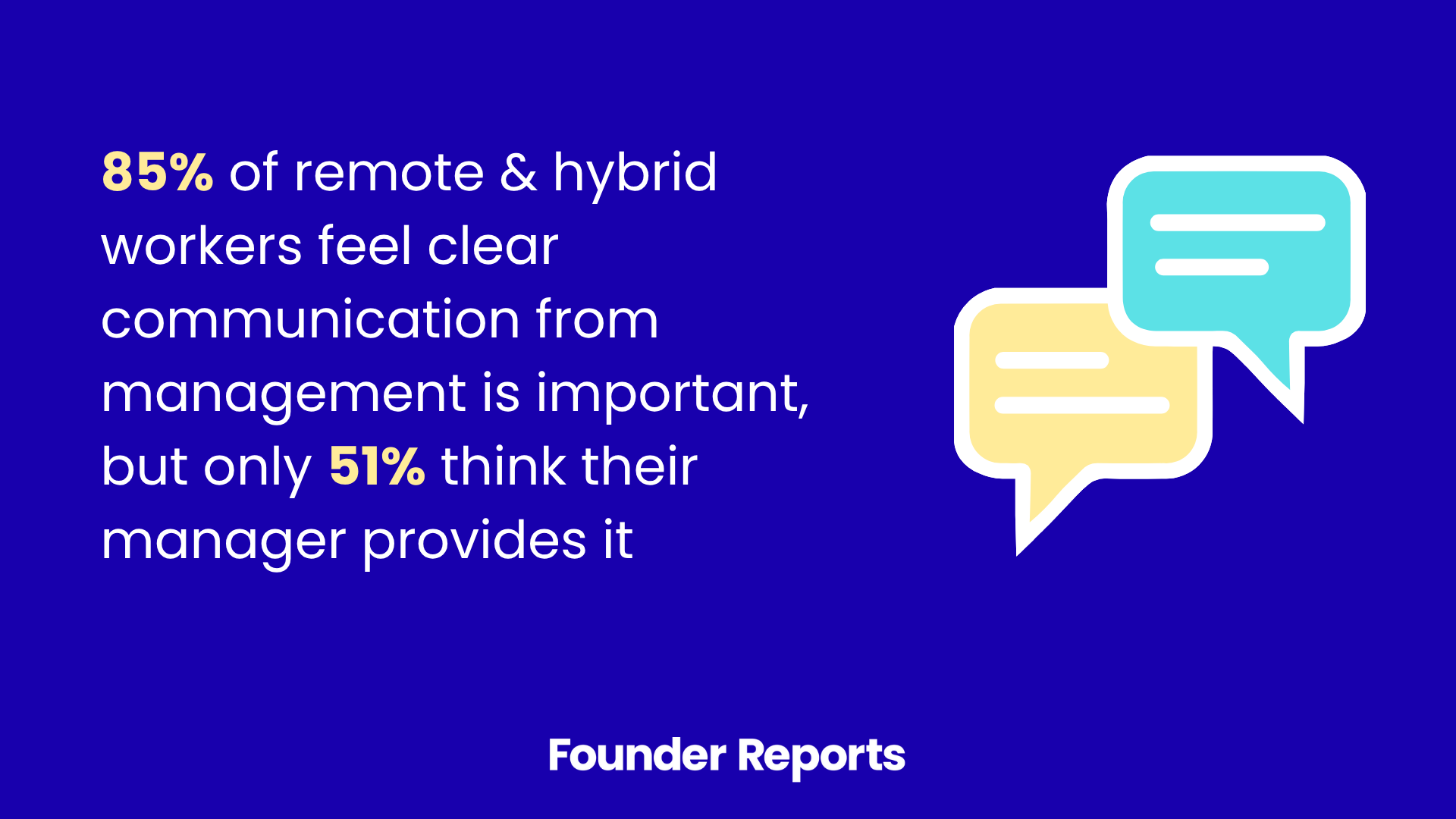
85% of remote and hybrid workers feel clear communication from management is important, but only 51% think their manager provides it
Remote workers value flexibility more than career advancement and say manager communication is lacking, placing retention at risk.
YORK, PA, UNITED STATES, December 2, 2025 /EINPresswire.com/ -- Founder Reports has released new findings from a survey of 1,000 U.S.-based remote and hybrid workers, revealing significant trends in employee priorities and workplace preferences. The results highlight how flexibility, communication, and management quality are now central to worker satisfaction and retention.
The survey shows that flexibility is now the
The data also underscores a growing return-to-office tension. When asked how they would respond if remote work ended, 64% said they would quit or begin searching for a new job, indicating a potential turnover risk for employers considering strict RTO mandates.
Communication was shown to be an area where many managers of remote and hybrid teams are coming up short. While 85% of workers said clear communication from management is essential, only 51% feel they receive adequate communication, and just 40% say their manager provides clear feedback.
Despite these concerns, 90% of remote and hybrid employees report feeling trusted by their manager. However, 44% still feel additional pressure to prove their value as remote employees, indicating lingering visibility and performance anxiety.
The survey also found that employees are willing to make personal trade-offs to maintain remote work. Sixty percent of respondents said they would accept a pay cut to remain remote, including 42% willing to take a 10% or greater reduction.
Generational differences emerged as well. Gen Z was the only age group that preferred hybrid work over fully remote options, suggesting that early-career workers may value in-person collaboration more than older generations.
Full details of the remote and hybrid worker survey are available at Founder Reports.
About Founder Reports
Founder Reports publishes research-driven insights for entrepreneurs, business leaders, and professionals navigating the changing landscape of modern work. The platform focuses on workplace trends, management practices, and data that help organizations make informed decisions.

No comments:
Post a Comment